

Our Vision
A nation where every citizen understands, exercises, and protects their constitutional rights without compromise.
Our Mission
To create constitutional awareness across education, agriculture, labour, culture, and every field that touches a citizen's life.
Our Method
Volunteer-led sector committees, organised at every Panchayat level built on service, open dialogue, and direct community action.
Why We Exist
The political parties that have governed since Independence have compromised the original aspirations of the Constitution. The Legislature, Executive, and Judiciary each tainted by layers of corruption have drifted from their constitutional purpose.
This is not a distant political problem. It reaches into every village where a farmer cannot access a scheme, every factory where a labourer has no recourse, every classroom where a student leaves without understanding their rights.
Daari Foundation was born from the recognition that this erosion is fatal to democracy and that the antidote is awareness, organised at the grassroots.
"Realising that this could be fatal to democracy in the future, this organisation was started to create awareness among citizens."
Governance has moved away from constitutional ideals. Citizens are left with rhetoric rather than rights spectators in a system meant to serve them.
Despite countless government departments and schemes, farmer welfare has not been genuinely achieved. Rural India still waits for promises kept.
Factory closures, conflicts, and insecurity stem from a knowledge gap workers unaware of the constitutional and legal protections available to them.
A large number of young people fall victim to inter-religious and caste conflicts. Without constitutional grounding, division fills the void that education should occupy.
Living traditions in art, sport, and language are fading. The next generation risks inheriting a culture that exists only in history books.
What We Do
Every programme is organised by our foundation and led by volunteer representatives
committed to building an equitable, constitutional India from the classroom to the Panchayat.

Open dialogue programmes for college students create constitutional awareness across political, social, economic, and religious dimensions nurturing future leaders in legislature, judiciary, media, and beyond.

Farmer-led committees work under "Service to Land is Service to God" addressing land rights, water access, organic farming, cooperatives, and producers' associations for lasting rural welfare.

Organising committees of factory and field workers to bridge the gap between constitutional protections and real-world security reducing conflicts, closures, and worker insecurity.

All-Religion Conferences (Sarvadharma Samavesha) promote the truth that all citizens are children of this soil practising faith while viewing others with love, peace, and constitutional respect.

Awareness campaigns for protecting urban parks and conserving hills, mounds, and water streams preserving India's natural heritage and ecological balance for future generations.

Community health camps and awareness drives around chemical-free food connecting citizens to healthier practices rooted in traditional Indian wisdom and modern public health knowledge.

Service centres at every Panchayat level bring government scheme awareness directly to rural doorsteps eliminating costly city visits and ensuring benefits reach their rightful recipients.

Continuous programmes to develop and preserve rural arts, sports, literature, and mother tongues ensuring the next generation inherits a living, breathing culture, not a museum exhibit.

Whenever necessary, workshops are organised for all citizens equipping them with the knowledge to live a peaceful, contented, and constitutionally grounded life within the democratic system.
Our Process
Every project follows the same disciplined path: root it in the Constitution,
organise from within the community, and measure success by the lives changed.
We identify which community farmers, labourers, students, or citizens is most underserved relative to their constitutional entitlements.
Service-minded volunteers from within that community form a sector committee. Not outsiders people who live the issue every day.
Awareness camps, dialogues, workshops, and conferences are organised at the Panchayat level where the gap between law and life is most visible.
Responsibilities are assigned to volunteer representatives. Progress is tracked, shared, and used to improve the next cycle of work.
Programme Spotlight
Each of our nine programmes has a dedicated committee structure, a constitutional basis,
and a concrete set of actions that communities can see and feel.
Education
We run structured dialogue sessions at colleges, creating constitutional awareness and developing students into the next generation of leaders for legislature, media, judiciary, and public service.
Agriculture
Farmer-formed committees tackle land rights, water access, organic farming, forest conservation, and cooperative formation building permanent solutions from within the farming community itself.
Health
Regular health camps bring primary care to rural communities. Alongside them, food awareness drives help families transition away from chemical-heavy diets toward safer, more sustainable eating.
Harmony
We bring together citizens of all faiths to affirm a simple truth: we are all children of this soil. These conferences build understanding, reduce conflict, and ground coexistence in constitutional values.
Art & Culture
Traditional art forms, regional sports, and local languages are fading. Our cultural preservation programmes ensure that the generations to come can experience not just read about their heritage.
Service
One centre per Panchayat, staffed by trained volunteers, delivers government scheme awareness and application assistance at low cost so no rural citizen is forced to travel to a city for what they deserve by right.
A board of trustees drawn from different districts of Karnataka, united by a shared commitment to service.
Sri. Rangaiah
PresidentSri. M.K. Appaiah
ConvenorSri. Prabhakara
ConvenorSri. T.S. Veeresh Kumar
SecretarySri. Vishwanath M Kulkarni
TreasurerEleven areas of work the Trust is empowered to undertake, spanning education, welfare, and public service.
Establish, institute, acquire, takeover, maintain, run, administer and support Primary, Pre-Primary, Secondary Schools, High Schools and Colleges in Arts, Commerce, Sciences, Education, Literature (including Indian Classics), and Physical & Biological Sciences, up to Graduation and Post-Graduation both residential and non-residential.
Establish, institute, acquire, takeover, maintain, run, administer and support Vocational Training Institutes, Polytechnics, Computer Training Centres, Schools and Colleges in Agriculture, Medicine, Pharmacy, Engineering, and other Technical & Professional courses and fields it considers necessary both residential and non-residential.
Establish, institute, acquire, takeover, maintain, run, administer and support Research Centres for Doctoral and Post-Doctoral research in Humanities, Science, Medicine, and Technology.
Promote Mass Education and Adult Education through formal or non-formal classes, symposia, or any other mode.
By any other mode, establish, institute, acquire, maintain, run, or support colleges, or conduct through present and future institutions, vocational courses, job-oriented courses, and training centres in general and particularly for physically & mentally handicapped pupils.
Establish, institute, acquire, takeover, maintain, run, administer and support reading rooms, libraries, centres for publication of books and other educational material, public museums, galleries of works of art, collections of natural history, and scientific equipment.
Establish hostels, hospitals, clinics, dispensaries, and nursing homes to cater to the medical needs of the poor.
Help the poor and people with disabilities; donate to and assist people affected by earthquakes, tsunamis, floods, and similar calamities without distinction of caste or creed.
Accept donations and contributions from within and outside India for the development of the Trust, along with movable and immovable properties of right and privilege.
Promote Kannada, English, Hindi, Urdu, Arabic, and other languages.
Arrange to pay taxes to Government, Corporation, or other concerned authorities as constituted by law.

Education & Youth
Protecting democracy begins with awareness. Our college-level open dialogue programmes do more than teach they ignite a sense of constitutional ownership in young people who will become the judges, editors, legislators, and farmers of tomorrow.

Agriculture & Land
The farmer is called the backbone of India. Yet policy after policy has failed to deliver on that promise. Daari Foundation's agricultural committees are farmer-formed, farmer-led, and farmer-accountable building real solutions, not dependence on distant departments.

Labour & Workers
Factory conflicts, insecurity, and closures often stem from one root cause: workers do not know what the law already guarantees them. Our labour committees create that bridge turning constitutional protections from ink on paper into real security in people's lives.

Harmony & Coexistence
The Constitution protects all religions equally. Yet inter-religious and caste conflicts claim countless young lives each year. Through Sarvadharma Samavesha, we create spaces where people of all faiths affirm their shared identity as Indians and their shared stake in democracy.
Our Reach
Our work does not begin in boardrooms. It begins at village meetings, college dialogues, and Panchayat service desks.
From the Field
Every image is a moment where the distance between a right on paper and a right in practice was closed a little further.
Our Foundation
Every Daari Foundation programme derives its legitimacy and direction from India's Constitution not from political parties, not from popular sentiment, but from the supeme law of the land.
We work across these pillars because the Constitution guarantees them to every citizen and we believe that guarantee must mean something on the ground.

Preamble
The Preamble promises justice to all citizens. Our work in education, agriculture, and labour is a direct response to this promise emaining unfulfilled for millions.
Article 25
Every citizen has the right to practice and propagate their religion freely. Our Sarvadharma Samavesha programmes are built on this constitutional guarantee and on the belief that it is best protected through mutual respect.
Article 19
Open dialogue sessions at colleges are a direct exercise of this freedom and a training ground for citizens who will use it responsibly throughout their lives.
Directive Principles
Part IV directs the state toward farmer welfare, worker security, and public health. Where the state falls short, we organise citizens to understand what they are owed and how to pursue it.
How We Work
Every project begins with the Constitution as its compass and is carried forward by the citizens most affected by the issue not by outsiders with clipboards.
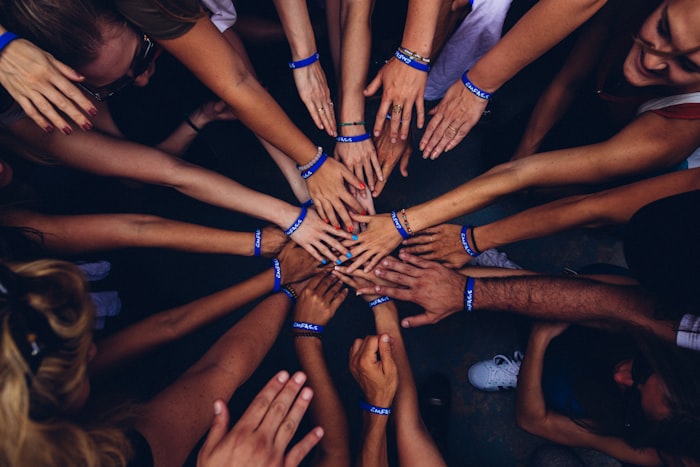
We bring together farmers, labourers, students, and community leaders who live the issue every day and are willing to lead from within their own communities.
The Constitution is our only reference not politics, not parties, not opinion. We ask one question: what do citizens deserve under this foundational document?
Service centres, awareness camps, and workshops are taken directly to communities where the gap between constitutional rights and daily reality is most visible.
Responsibilities are assigned to volunteer representatives. Progress is shared openly, success is celebrated, and every learning feeds the next cycle of work.
Voices from the Community
The Constitution gives everyone a voice. Our work helps people find it.
Get Involved
Every committee, every camp, every dialogue session is run by volunteers who decided that awareness was not someone else's job. Join them.
Express Your Interest
Share your name and contact and a volunteer coordinator will reach out within two working days to discuss how you can contribute.
We've received your interest and sent a confirmation to your contact. A volunteer coordinator will reach out within two working days.